












Searching for the best EV charger factory China can produce a long list of suppliers, but a list alone does not reduce project risk. A distributor, EPC contractor or CPO needs to know whether a factory can supply the required commercial EV charger, maintain batch consistency, support field commissioning and provide documents for the destination market.
The right question is not “Which factory has the lowest price?” It is “Which supplier can deliver the required charger, evidence and support for this project?” Use the following 12 questions before approving a sample or bulk order.
1. Can the factory show the exact product family?
Ask for a model-specific datasheet rather than a general catalogue. Confirm whether the factory supplies AC, DC or both; the available power range; floor-mounted or wall-mounted design; single-gun or dual-gun operation; connector options; input voltage; output voltage and environmental limits.
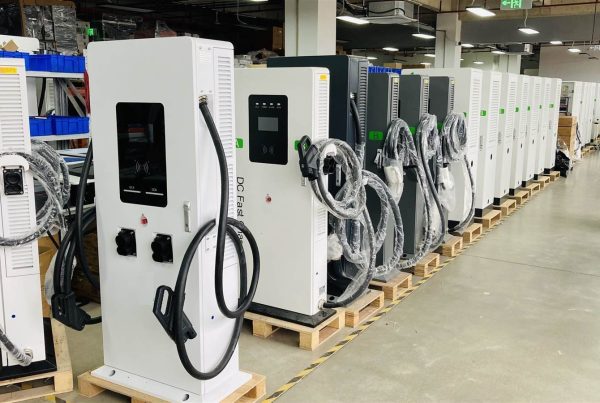
For a 60kW, 120kW or 160kW EV DC charger, confirm whether the quoted rating applies to one output, the complete cabinet or a shared power module. Do not assume that a photo of a dual-gun charger proves two vehicles receive full power at the same time.
Ask the factory to identify the commercial name, internal model number and hardware revision on the quotation. Confirm that the product page, datasheet, sample, certificate and packing list all refer to the same configuration. If the product family covers several powers, request a comparison table rather than assuming the highest listed rating applies to every enclosure.
For a distributor, this check also protects the future product page. The technical data used in a catalogue, sales presentation and quotation should remain consistent. If a value is optional or market-dependent, label it clearly before the product is promoted.
2. What is actually manufactured in-house?
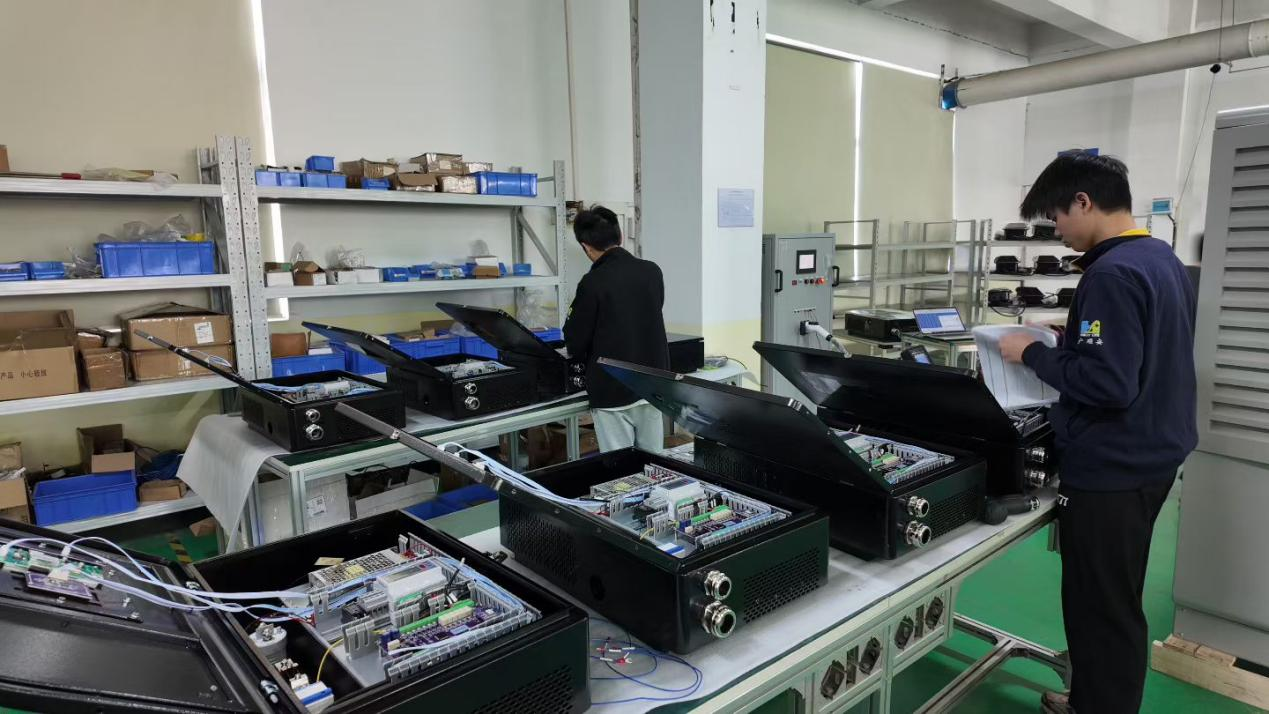
Ask which parts are designed, assembled, tested and serviced by the factory. The answer may include power modules, control boards, enclosure, cable assembly, software and payment hardware. A trading company may still be useful, but its responsibility and technical control should be clear.
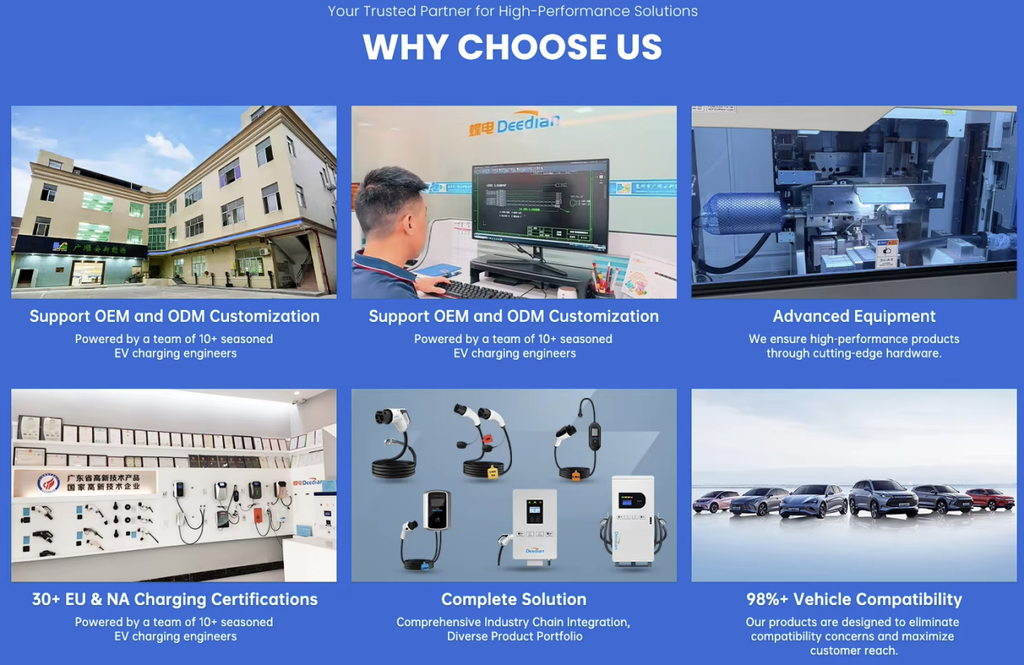
The question is not intended to disqualify suppliers that use qualified partners. It is intended to make responsibility visible. Ask who owns the design, who performs final inspection, who stores spare parts and who approves component changes. Those answers are especially important when the buyer needs repeat orders, private labeling or field repairs in more than one country.
3. Can the supplier support OEM and ODM?
An EV charger factory OEM ODM project should define what can be changed: logo, enclosure colour, screen language, cable length, connector, payment device, firmware interface, packaging and label. Confirm minimum order quantity, sample process, tooling, approval stages and who owns the artwork and firmware configuration.
Customization can affect testing and lead time. Ask whether the customized version keeps the same certified configuration or requires additional evaluation.
4. How are samples tested before bulk order?
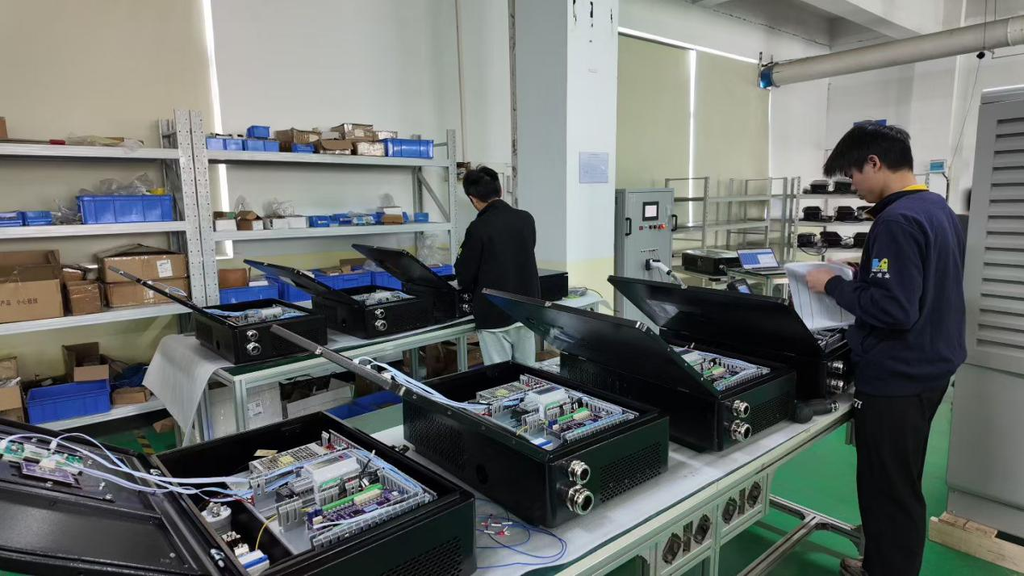
A professional EV charger sample testing process should verify output, communication, connector operation, protection, screen, payment, load sharing and environmental behavior according to the agreed specification. Ask for a sample checklist with pass criteria, test instruments and responsible sign-off.
Run the sample with the customer’s intended backend and representative vehicle where possible. A successful factory demonstration is not the same as a field test across every vehicle model.
5. Which OCPP functions are tested?
An OCPP EV charger manufacturer should identify the supported protocol version and functions for the exact model. Ask about authorization, start and stop commands, meter values, status notifications, firmware updates, offline transactions, reset, diagnostics and error codes.
If the factory offers pre-shipment OCPP configuration, confirm what the customer must provide: CSMS URL, identity, authentication, certificates and tariff rules. The installer should still run an on-site connectivity and payment test after delivery.
6. Which certificates belong to which model?
Request the certificate number, product model, rated configuration, issuing body, validity and destination-market relevance. A factory certificate for one AC charger cannot automatically prove compliance for every DC model. Ask which connector, power range and enclosure are covered.
The importer or local engineer remains responsible for checking the requirements in the destination country. Do not use a supplier’s broad “global certification” phrase as a substitute for document review.
7. How is batch quality controlled?
Ask whether the factory uses incoming inspection, process inspection, aging or burn-in, electrical safety testing, output testing, communication testing and final inspection. Confirm whether batch records can be supplied and how non-conforming units are handled.
The useful evidence is a sample record, not only a statement that the product is “high quality.”
8. What is the production and delivery capacity?
Ask for realistic sample lead time, normal batch lead time, peak-season capacity, critical component availability, change-notification policy and packaging method. Long-term supply capability matters to distributors launching a product line or CPOs expanding a network.
Ask how an approved component substitution is communicated and tested. A cheaper component change can alter performance, certification or spare-parts planning.
9. What technical support is included?
Clarify pre-sales configuration review, installation drawings, remote commissioning, training, troubleshooting, spare parts and escalation. State response time, working hours, remote-access method and whether travel is included.
A factory that sells the cabinet but cannot support the installation may create more cost for the EPC.
10. What does the warranty cover?
Ask for warranty period, covered parts, exclusions, return process, labour, freight, firmware support, battery scope if applicable and the definition of a failed charger. Also ask how spare parts are stocked and whether technicians can replace a module without replacing the entire cabinet.
11. Can the factory support distributors?
An EV charger manufacturer for distributors should discuss territory, training, marketing files, product updates, lead handling, spare parts and price protection. The distributor also needs accurate product pages, not a catalogue with specifications that vary between pages.
12. Is the quotation technically complete?
The final quote should state model, quantity, power, connector, input, cable, payment, OCPP, accessories, packaging, Incoterm, lead time, warranty, documents, installation exclusions and sample approval conditions. Ask the factory to mark every optional item.
Deedian can review OEM/ODM, commercial AC/DC and floor-mounted DC requirements based on the destination market and project schedule. Model-specific availability and certification should be confirmed before contract signature.
Frequently Asked Questions
Is the cheapest EV charger factory the best choice?
Not automatically. Compare the total cost of sample testing, commissioning, downtime, spare parts, support and compliance documents.
What should a distributor test first?
Test the exact model, connector, payment method, backend function, output behavior, documentation and warranty process required for the target market.