













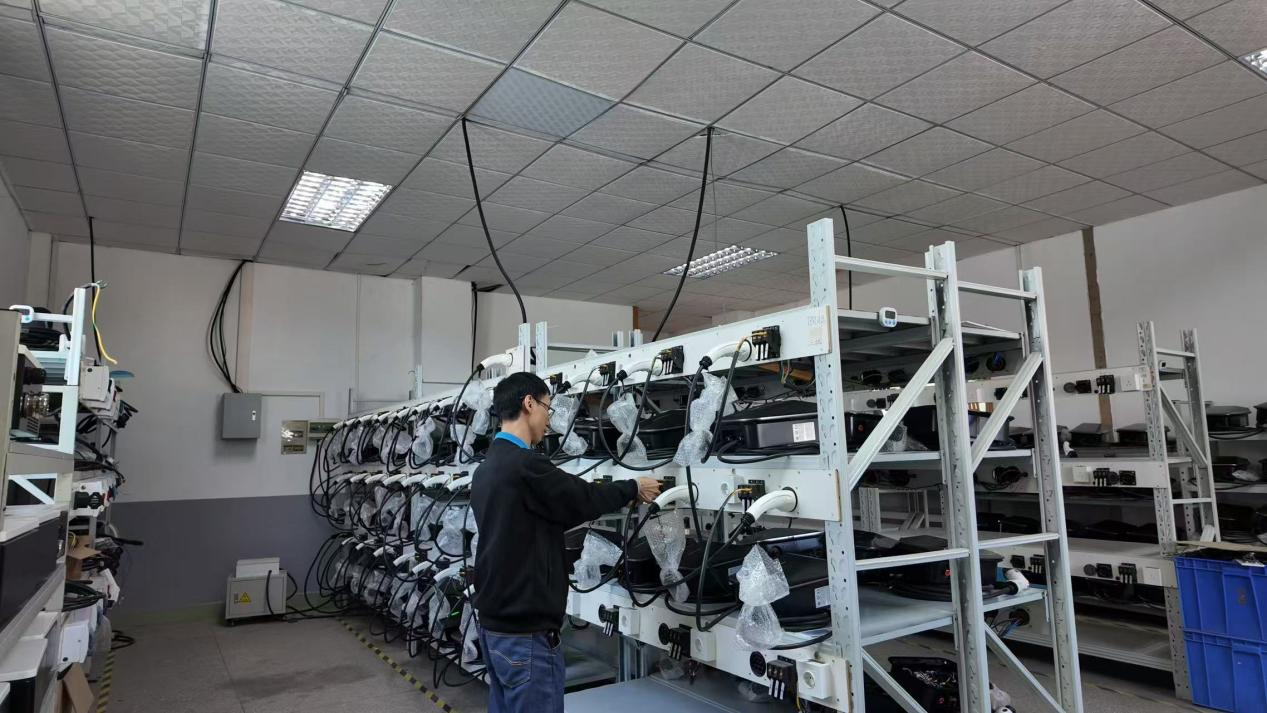
A factory catalogue can show a 60kW, 120kW or 160kW EV DC charger, but a catalogue cannot prove how the equipment will perform in a distributor’s market. Before approving a bulk order, buyers should test the exact model, connector, software configuration and commercial workflow required for the project.
This EV charger sample testing guide is for distributors, EPC contractors, CPOs, fleet operators and OEM buyers. It focuses on evidence that can be recorded before mass production instead of broad claims such as “high quality” or “global certification.”
Begin with a model-specific quality plan
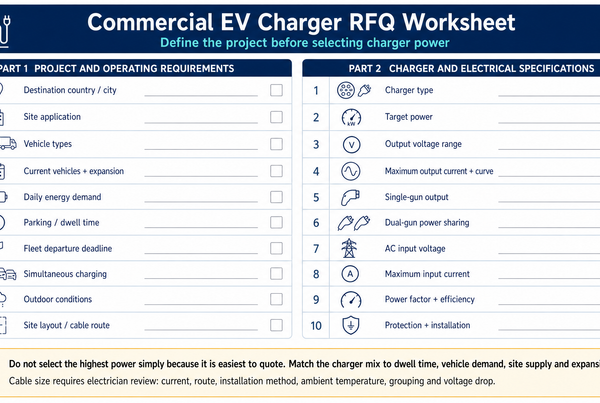
Write the acceptance plan before receiving the sample. It should identify the model, power, input, connector, cable, screen, payment method, OCPP version, operating environment and intended vehicle group. A test plan written after a problem appears is usually incomplete.
Ask the EV charger factory China supplier to confirm whether the sample has the same power module, control board, connector and firmware configuration as the planned batch. If a sample uses a temporary component, record it. The buyer should also confirm which changes require approval before production.
A useful plan contains four columns: test item, acceptance condition, evidence required and responsible person. The result should be pass, fail or open—not a general impression.
Electrical and output tests
First verify the charger’s input and output against the model datasheet. An installer or qualified test engineer should confirm the correct electrical method for the destination market. The exact test values depend on the product design and applicable standards.
For a DC charger, review:
- Input voltage, phase and frequency behavior.
- Output voltage and current range.
- Power delivery at representative loads.
- Output regulation and current limiting.
- Efficiency and power factor where measured.
- Single-gun and dual-gun power allocation.
- Emergency stop and protective shutdown.
- Insulation, grounding and leakage protection.
- Temperature behavior during a defined run.
Do not judge quality only by a short demonstration at maximum output. A commercial EV charger may run for long periods, share power between outputs or reduce power because of vehicle battery temperature. Record the test vehicle, initial battery state, ambient conditions, duration and power curve.
Vehicle, connector and payment testing
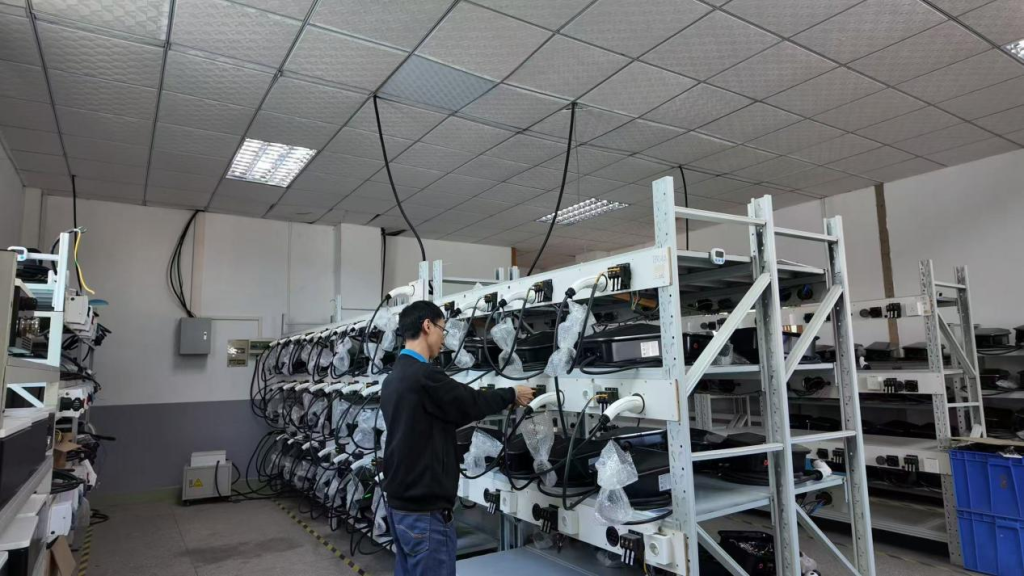
A charger can pass a bench test and still fail a real project if the connector or communication sequence is not tested. Use representative vehicles or an appropriate test system for the target market. Check plug locking, vehicle handshake, charging start, current changes, stop command and recovery after an interrupted session.
If the unit supports CCS2, CCS1, GB/T or another connector, test the exact supplied configuration. Do not assume that a physically matching connector proves full electrical compatibility with every vehicle.
Commercial projects also need a user workflow. Test QR-code authorization, RFID, PIN, POS or other available methods. Verify pre-authorization, tariff display, session records, refund or settlement logic and the behavior of an interrupted payment. If the product is sold to a CPO, the payment test should include the actual backend where possible.
OCPP and backend interoperability
An OCPP EV charger manufacturer should identify the supported protocol version and functions for the exact model. The buyer should test more than “the charger is online.” Include authorization, remote start, remote stop, meter values, status notifications, reset, diagnostics, firmware update and offline behavior as required by the project.
Ask the factory to provide the configuration fields used before shipment. If Deedian or another supplier offers pre-shipment configuration, the customer may need to provide the CSMS address, charger identity, authentication method, certificates and tariff rules. Factory configuration reduces setup time, but the site still needs a local network and commissioning test.
For EV charger load management, verify how the unit responds to a site power limit, a second vehicle connection, meter communication loss and controller restart. Confirm whether the limitation applies to the whole cabinet or each connector.
Mechanical and environmental checks
Inspect enclosure, door seals, cable support, connector holster, display, emergency stop, ventilation and mounting points. Confirm that the product configuration matches the intended outdoor conditions, temperature range, dust, water exposure, salt and vehicle movement.
Check whether cable weight is comfortable for the intended users and whether the cable can be returned to its holder without touching the ground. Inspect the screen under sunlight and check language, symbols and error messages.
A sample review should also record packaging, lifting points, spare parts and access to service areas. These details affect installation and maintenance even when the electrical test passes.
Batch consistency and factory evidence
Before a bulk order, ask how the factory controls incoming components, assembly, wiring, software loading, aging, final inspection and non-conforming products. Request a sample factory test record for the approved model. For a distributor, ask whether serial numbers, firmware versions and component changes can be tracked.
A reliable EV charger factory OEM ODM process should control logo, enclosure, screen language, labels and packaging without changing an approved electrical configuration unexpectedly. Clarify who approves artwork and how a revised firmware version is released.
The final approval pack may include:
- Approved datasheet and configuration drawing.
- Sample test report and open-issue list.
- Connector and vehicle test record.
- OCPP and payment test results.
- Certificate list matched to the model.
- Packaging and label artwork.
- Warranty, spare-parts and escalation terms.
- Production inspection and change-notification process.
A practical bulk-order decision
Approve the order only when the sample meets the agreed acceptance conditions or an exception is formally accepted. If one function is not tested, mark it as open and assign an owner and deadline. Do not let a sales deadline replace a technical decision.
Deedian can review a project test plan for commercial AC/DC products, OEM/ODM requirements and 60–160kW floor-mounted DC applications, subject to the selected model’s technical documents. The buyer should still use qualified local professionals for site electrical approval and market compliance.
Frequently Asked Questions
Is a factory certificate enough to approve a bulk order?
No. A certificate may cover a particular model and configuration, but the buyer should also test the actual sample, backend, payment workflow, vehicle compatibility and batch-control process.
How long should a sample test run?
There is no single universal duration. Define the run from the intended use, thermal behavior, charging window, vehicle profile and applicable test requirements, then document the conditions.