










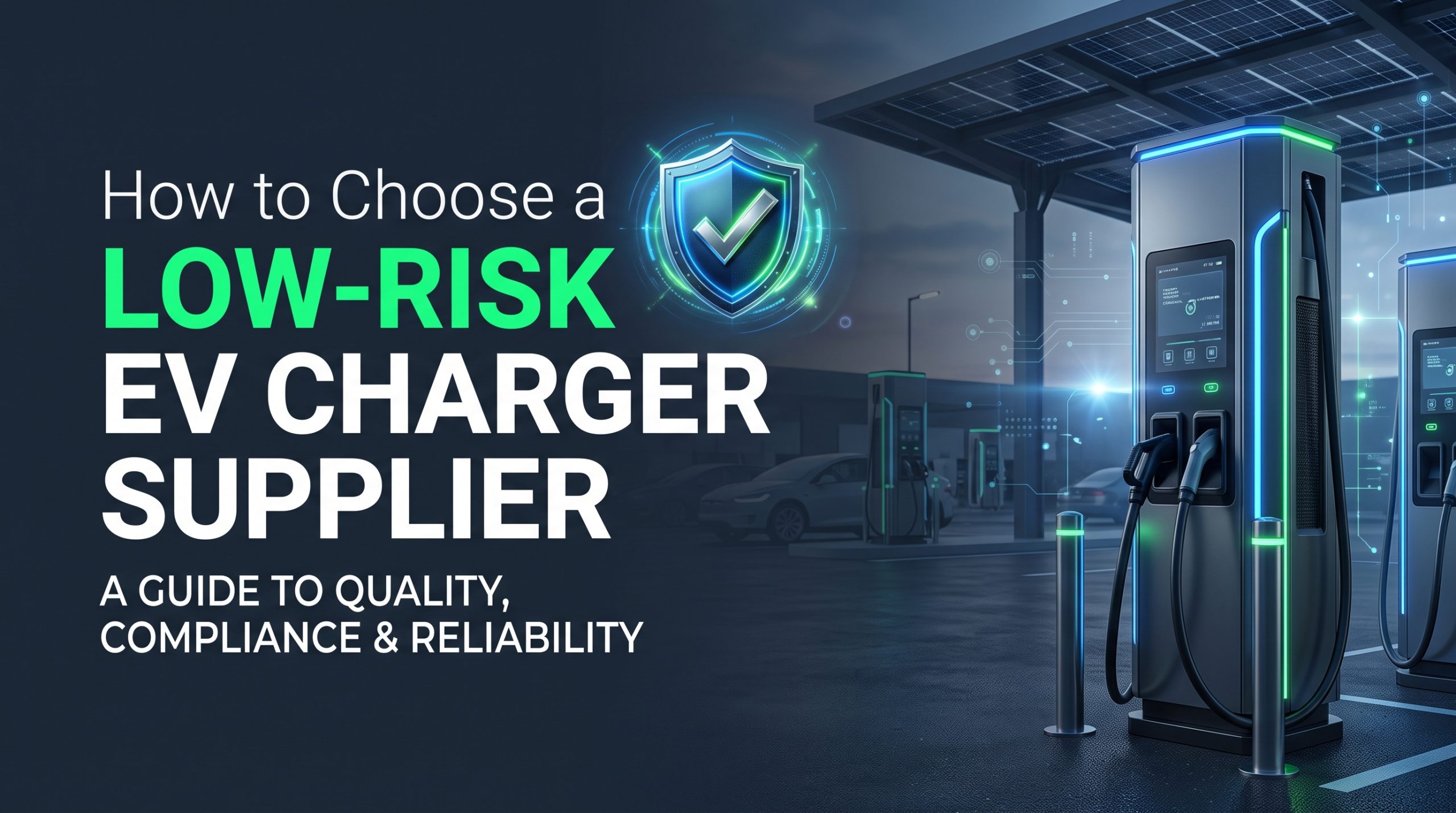
In the rapidly expanding electric vehicle (EV) market, selecting an EV charger manufacturer is one of the most critical decisions for Charging Point Operators (CPOs), fleet managers, and B2B distributors. While comparing initial unit prices is tempting, experienced commercial buyers know that the real cost of an EV charger lies in its lifetime operation, reliability, and supplier stability.
Partnering with an unverified or low-capacity supplier often results in high failure rates, extended station downtime, delayed deliveries, and an inability to source replacement parts two to three years down the line.
To protect your ROI and ensure operational continuity, this guide outlines a structured, risk-mitigated approach to evaluating and selecting long-term EVSE (Electric Vehicle Supply Equipment) manufacturing partners.
1. Look Beyond Price: The Hidden Risks of Low-Cost EV Chargers
When rolling out commercial EV charging infrastructure, a lower hardware cost can quickly be wiped out by unexpected operational expenses.
| Risk Category | Cheap/Unverified Supplier | High-Reliability Manufacturing Partner |
| Component Quality | Lower-grade power modules and basic relays | Tier-1 industrial power modules with proven thermal stability |
| Downtime Impact | Long wait times for spare parts; offline stations loss of revenue | Fast modular swap-outs, remote diagnostic capabilities |
| Supply Continuity | Risk of factory shutdown or sudden spec changes | Scalable manufacturing lines with standardized supply chains |
| Customization & OEM | Standard off-the-shelf units with no modifications | Flexible OEM/ODM options (branding, dynamic load control, screen integration) |
Evaluating suppliers through a Risk Mitigation Lens helps avoid long-term operational failure and protects your brand reputation.
2. Evaluate Core Manufacturing & Quality Control Capabilities
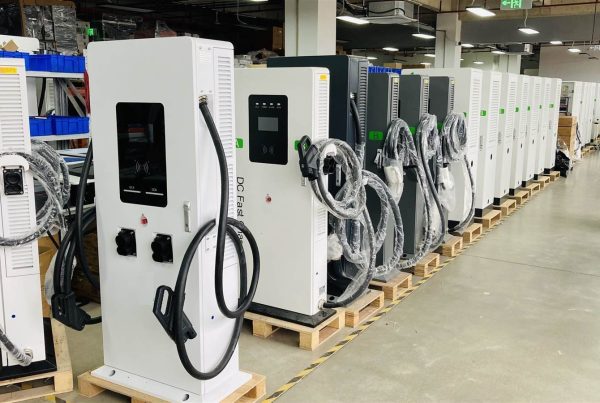
A manufacturer’s supply capability is determined inside the factory. Before signing a procurement contract, B2B buyers should inspect three crucial manufacturing stages:
A. Design & Engineering Verification
Commercial charging environments demand heavy-duty durability. Check whether the manufacturer conducts rigorous design verification, including:
Thermal Performance Testing: Ensuring stable output under extreme ambient temperatures.
Protection Ratings: Verifying robust IP ratings (e.g., IP54/IP55) for outdoor dust and rain resistance.
Protocol & Standard Compliance: Ensuring seamless communication with vehicles via standard charging protocols (CCS1, CCS2, CHAdeMO, or NACS) and backend software (OCPP 1.6J/2.0.1).
B. In-Line Burn-In and Reliability Testing
High-power DC fast chargers (ranging from 60kW to 240kW+) undergo severe electrical stress. A reliable supplier must perform full-load aging and burn-in testing on every unit before it leaves the assembly line—not just sample testing.
C. Component Traceability and Supply Chain Stability
A long-term supplier maintains strong relationships with top-tier component vendors (contactors, meters, power modules, microcontrollers). Ask your supplier: Can key components be replaced quickly if a failure occurs, or will the entire unit need to be scrapped?
3. Assess Flexibility Across Commercial Applications
Different EV projects have unique technical requirements. A rigid product portfolio increases project deployment risks. A low-risk manufacturing partner offers a full range of flexible options:
Commercial & Public Stations: High-power DC fast chargers (60kW–160kW–240kW) equipped with dual guns and dynamic power allocation to maximize daily charging turnover.
Commercial Real Estate & Retail: Advertising-screen DC chargers (60kW–360kW) that provide dual revenue streams from both charging fees and media ads.
Fleets & Logistics Depots: High-efficiency wall-mounted or pedestal DC chargers (20kW–40kW) for overnight or top-up fleet charging without overwhelming grid connections.
Destination & Overnight Charging: Heavy-duty AC chargers (7kW–22kW) built for prolonged continuous operation.
Having access to a complete range of AC and DC charging hardware from a single supplier reduces integration risks and simplifies backend management.
Key Takeaway: Choose a supplier whose hardware architecture supports modular expansion. If your charging site needs to double its output in two years, your supplier should allow you to scale up power output by adding modules rather than replacing the complete charger structure.
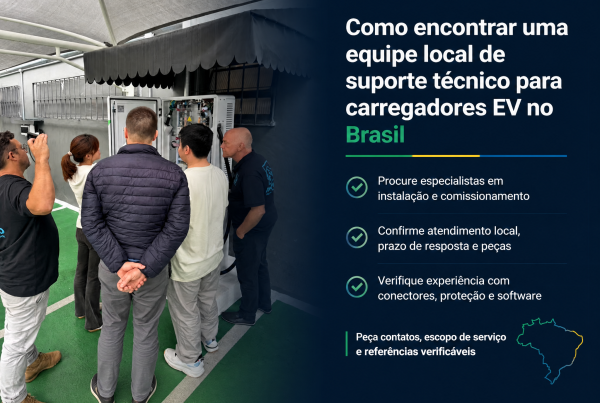
4. Verify Technical Support and OEM/ODM Services
1,For B2B importers, distributors, and turnkey contractors, after-sales support is just as vital as hardware engineering. A low-risk supplier should provide:
2,Clear Engineering Documentation: Comprehensive wiring diagrams, installation manuals, and fault-code troubleshooting guides.
3,Firmware & Remote OTA Support: Remote Over-The-Air (OTA) diagnostics to update firmware and resolve protocol compatibility issues without sending technicians on-site.
4,Custom Branding & OEM Flexibility: Custom paint, localized UI/UX display languages, and tailored enclosure branding to elevate your market presence.
5. Supplier Evaluation Checklist for B2B Buyers
Before finalizing your EV charger supplier, review this practical checklist:
[ 1] Factory Capacity: Does the manufacturer own dedicated production lines and testing facilities?
[ 2] Product Compliance: Are safety certifications and test reports fully documented for your target market?
[ 3] Modular Architecture: Are power modules standard and hot-swappable to ensure minimal downtime?
[4 ] OCPP Compatibility: Has the charger undergone third-party platform integration testing?
[ 5] After-Sales SLA: Are clear warranty terms, spare parts supply guarantees, and technical response times included in the contract?
Partner with Deedian: Reliable Commercial Charging Solutions
At Deedian (Huizhou Deedian New Energy Technology Co., Ltd.), we specialize in engineering high-reliability EV charging equipment designed for long-term operational success in global markets.
From 7kW–22kW AC Chargers to 60kW–960kW High-Power Commercial DC Fast Chargers and Advertising-Screen Solutions, Deedian combines strict quality control with flexible OEM/ODM manufacturing capability.
Ready to Secure Your EV Infrastructure Supply Chain?
Whether you are launching a public fast-charging network, outfitting a commercial fleet depot, or seeking a trusted OEM manufacturing partner: